

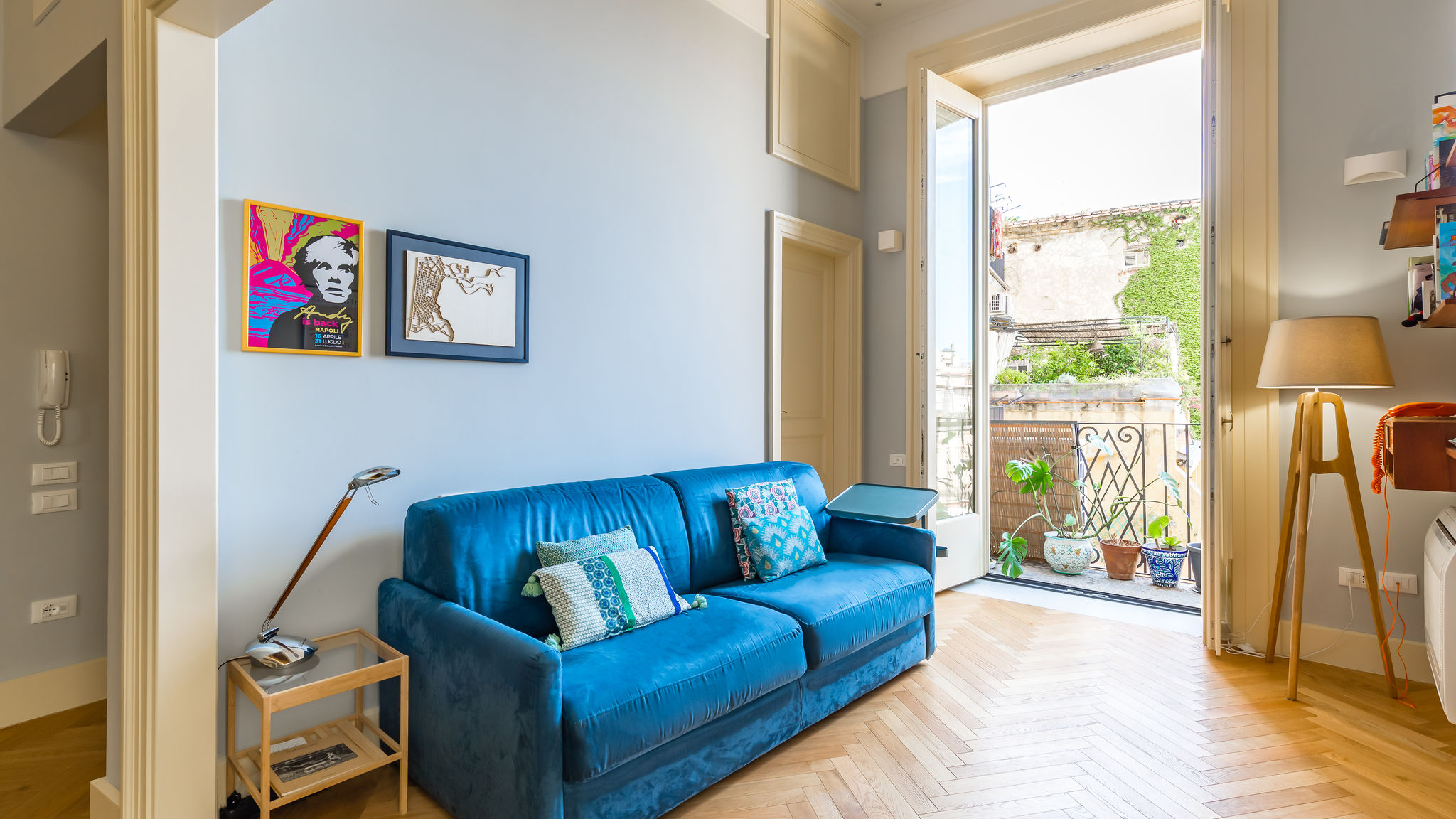
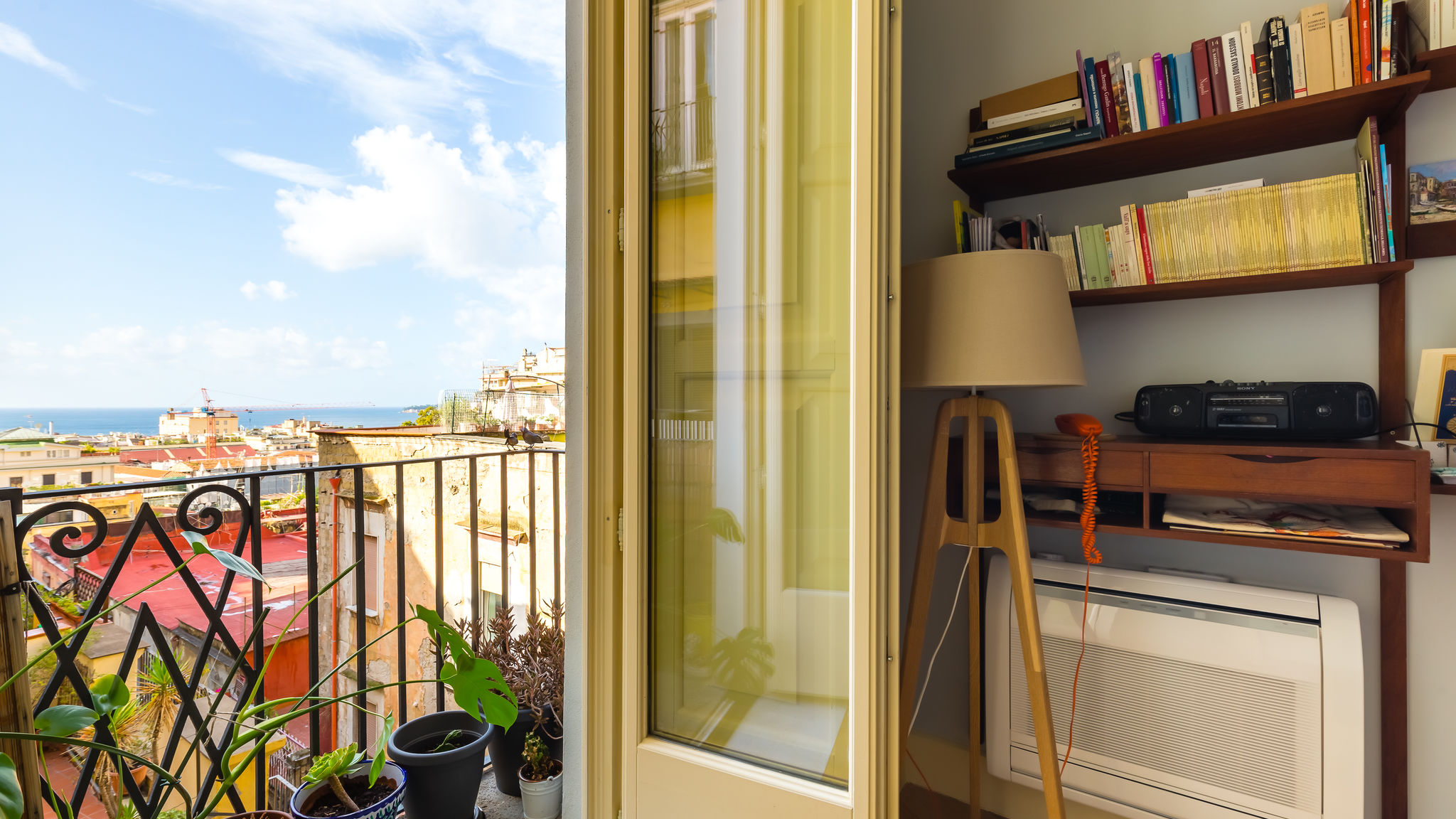
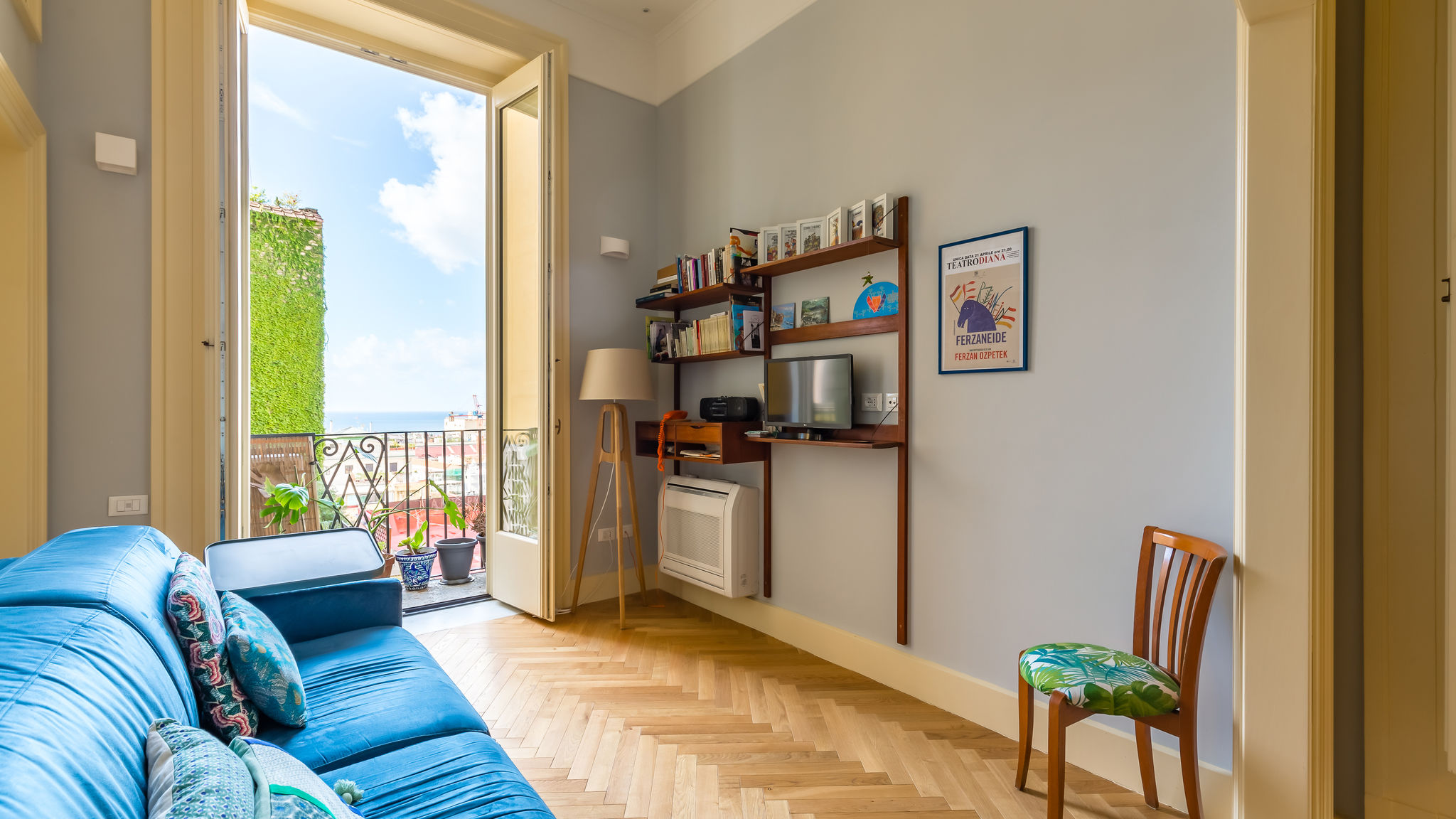
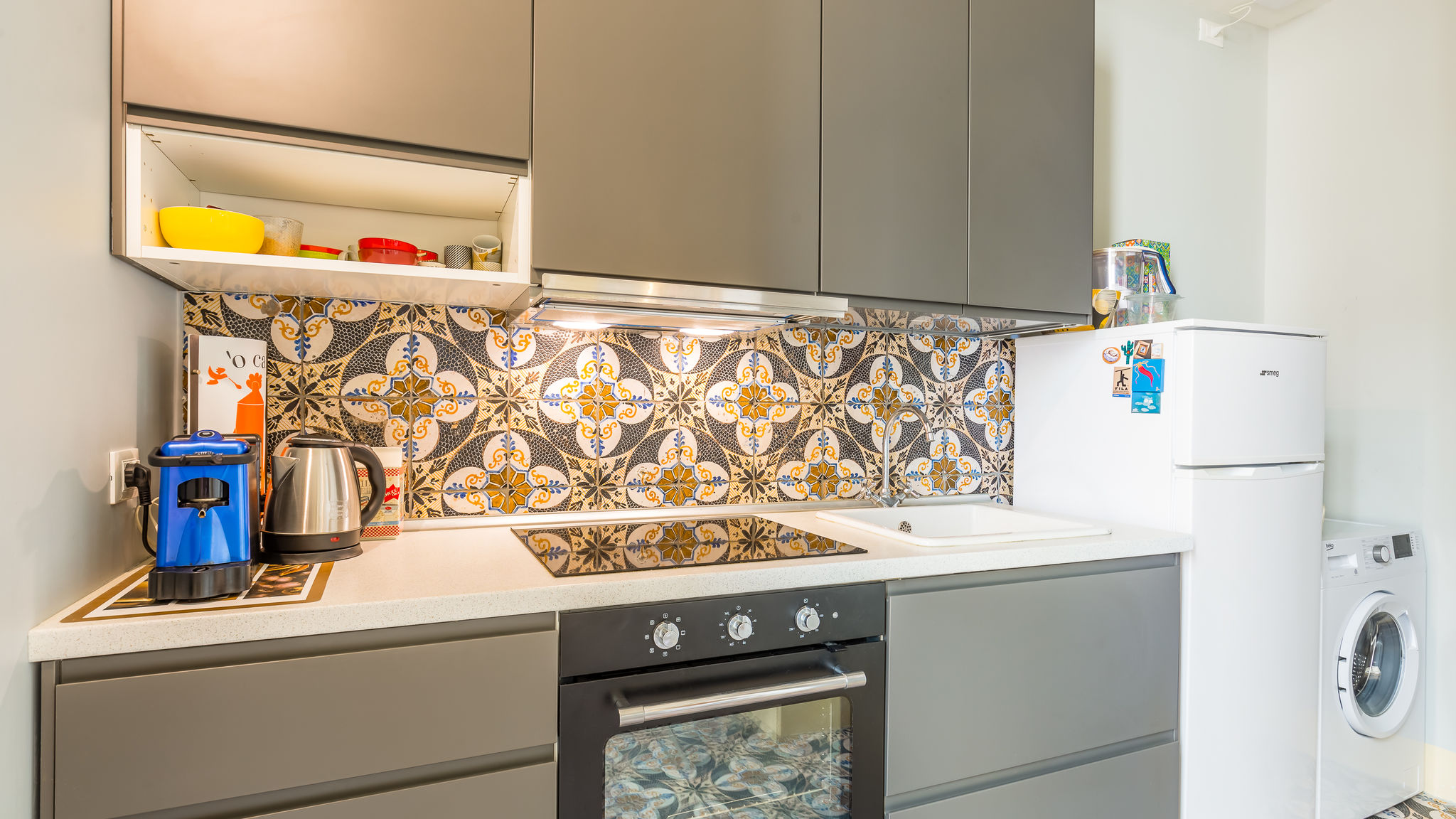
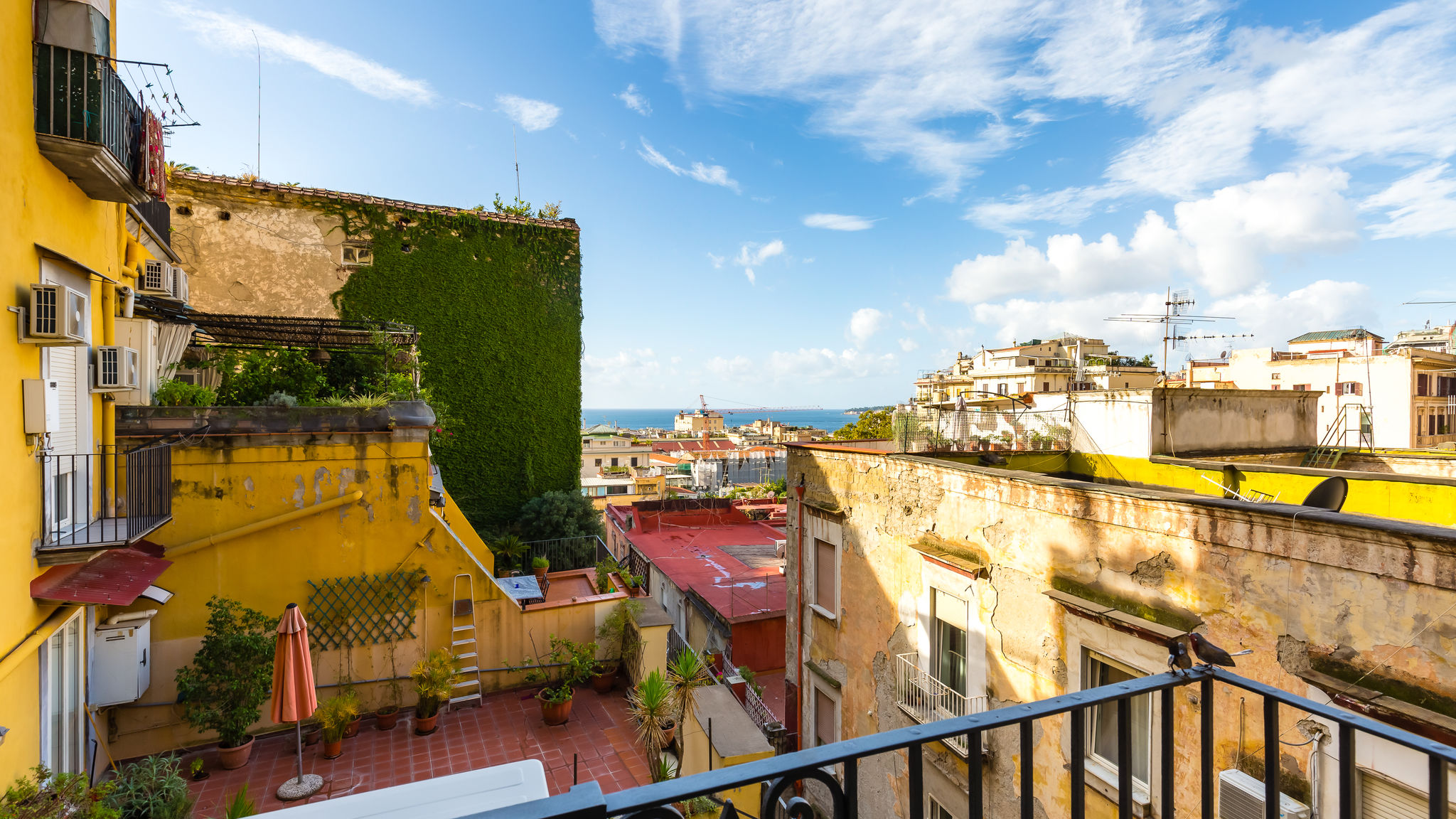
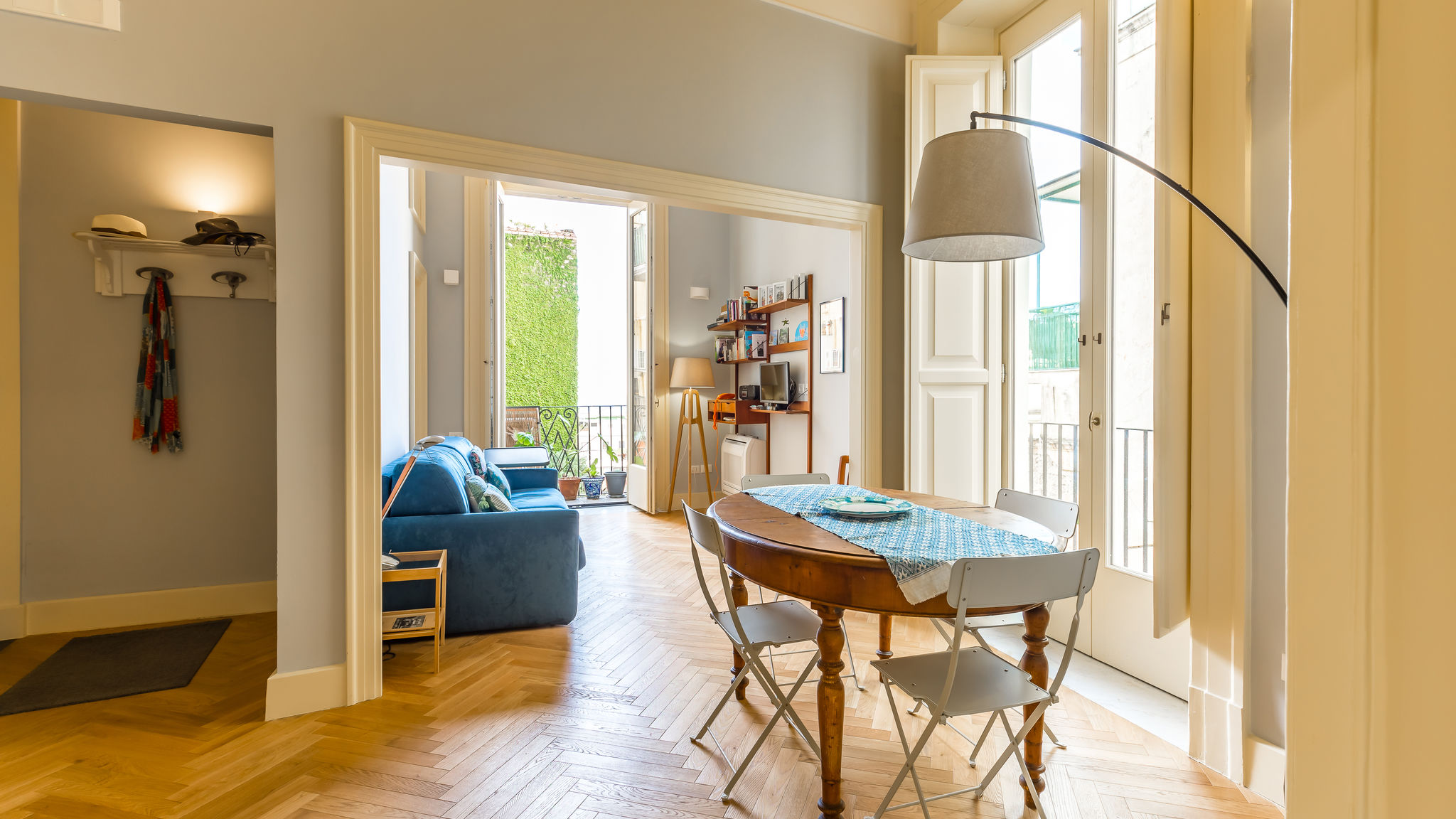
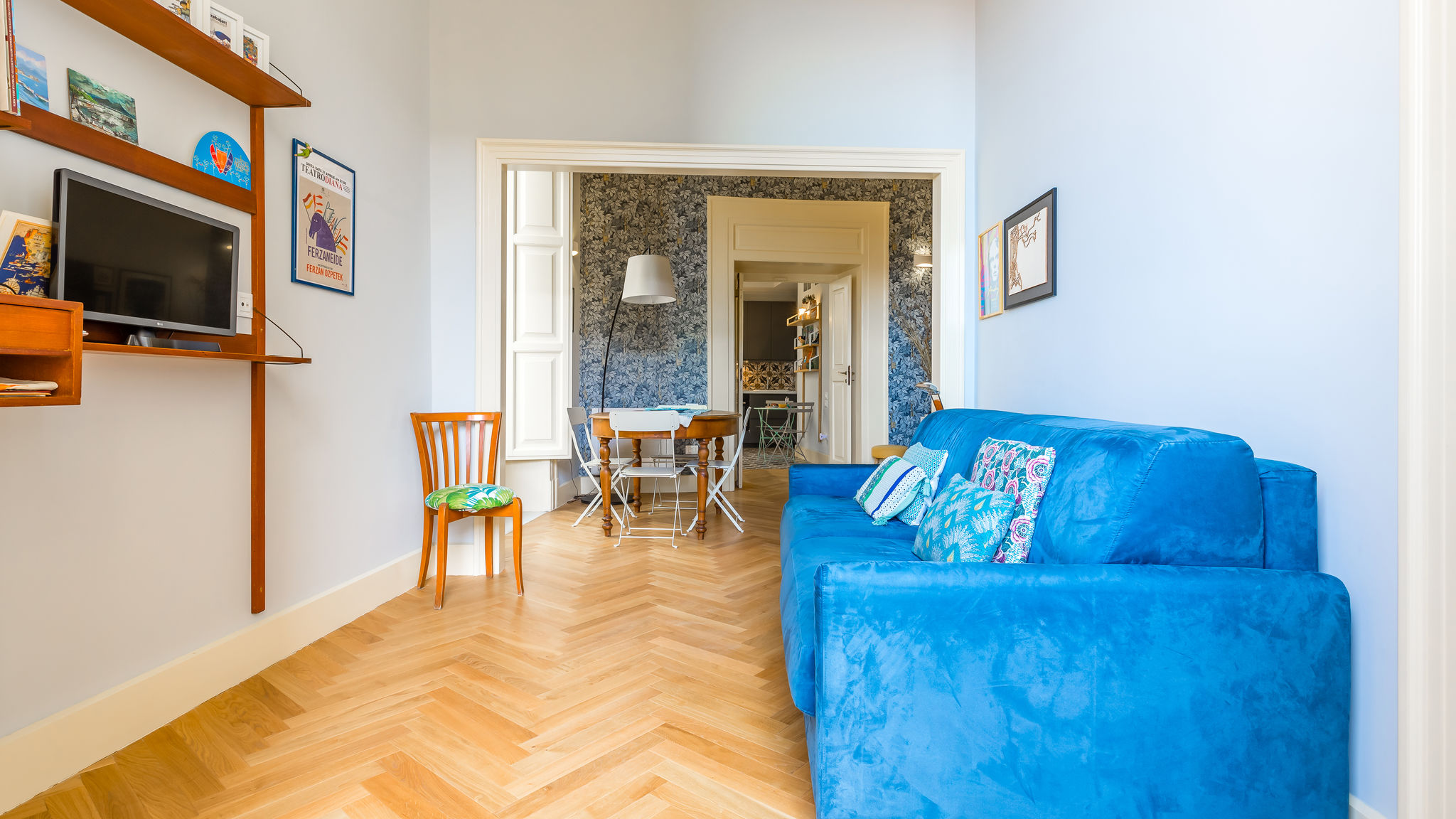
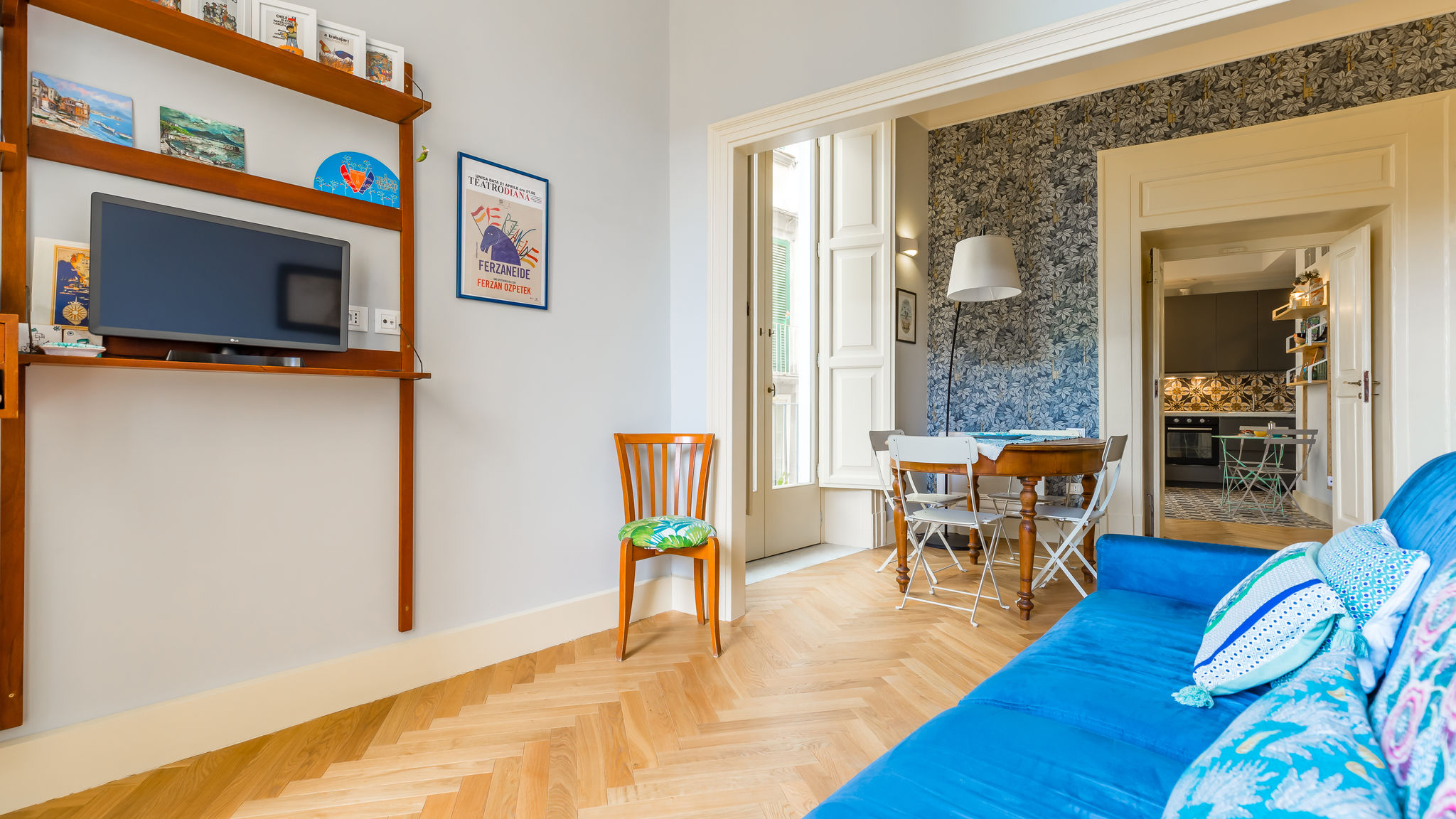
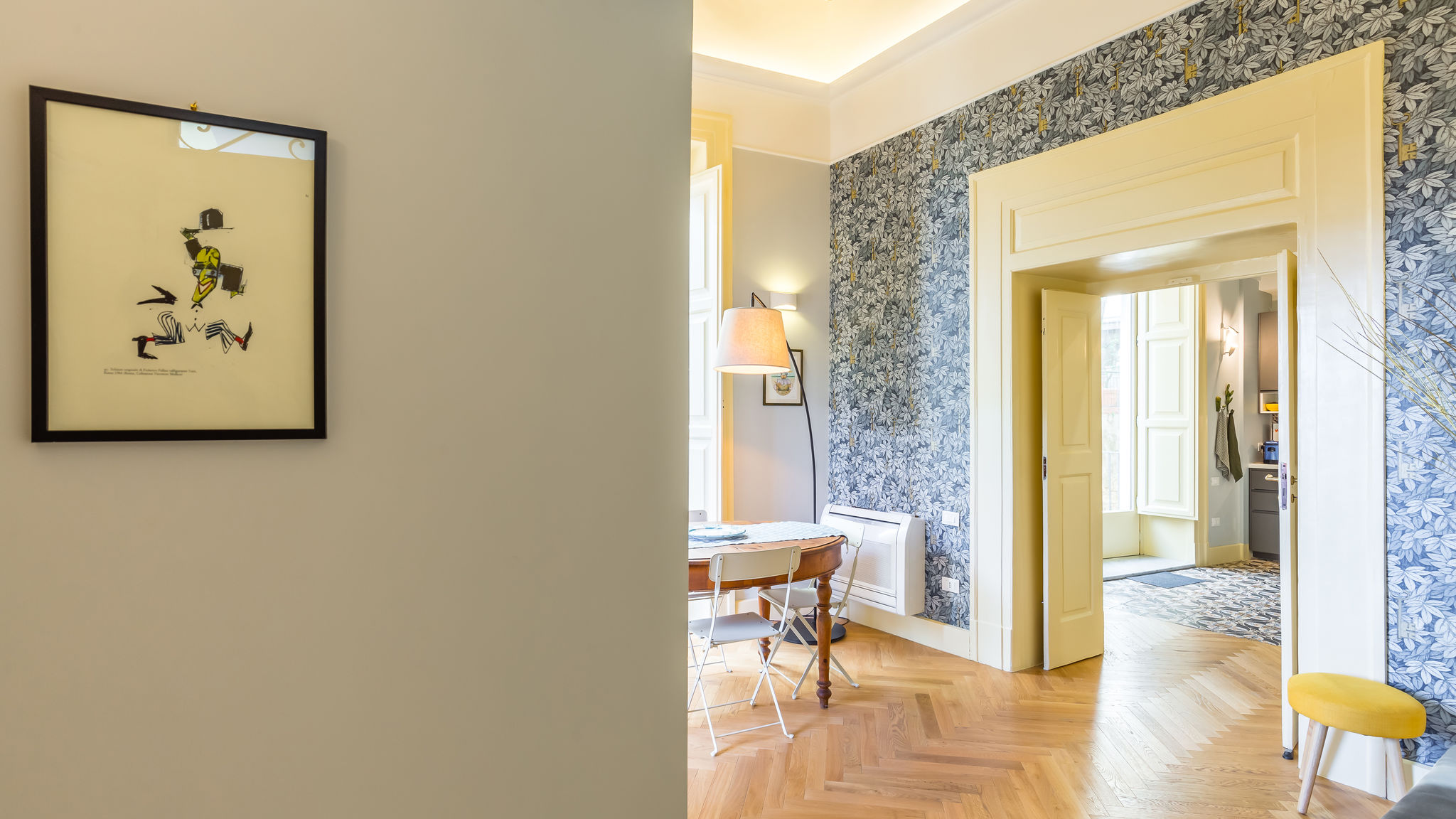
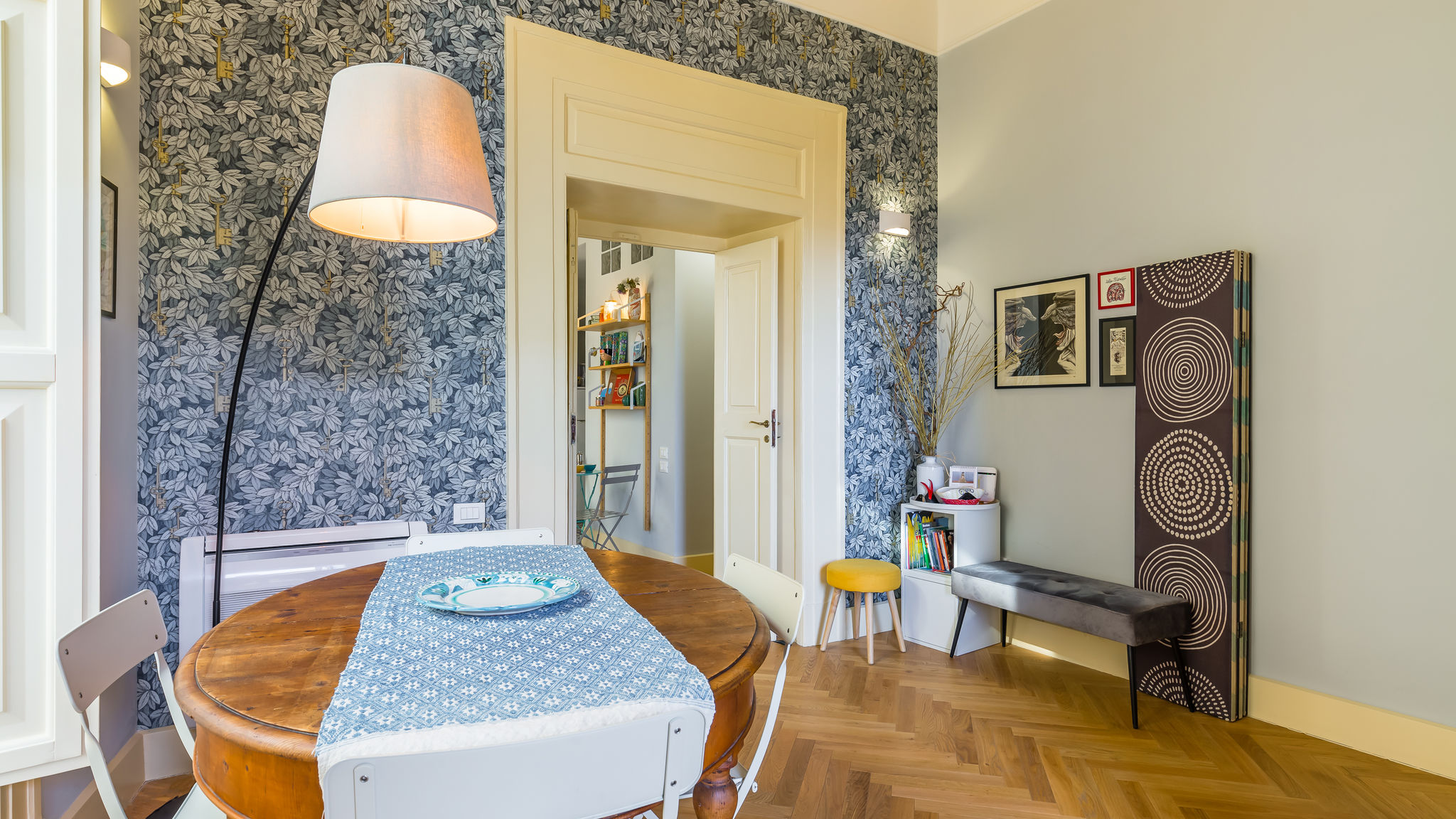
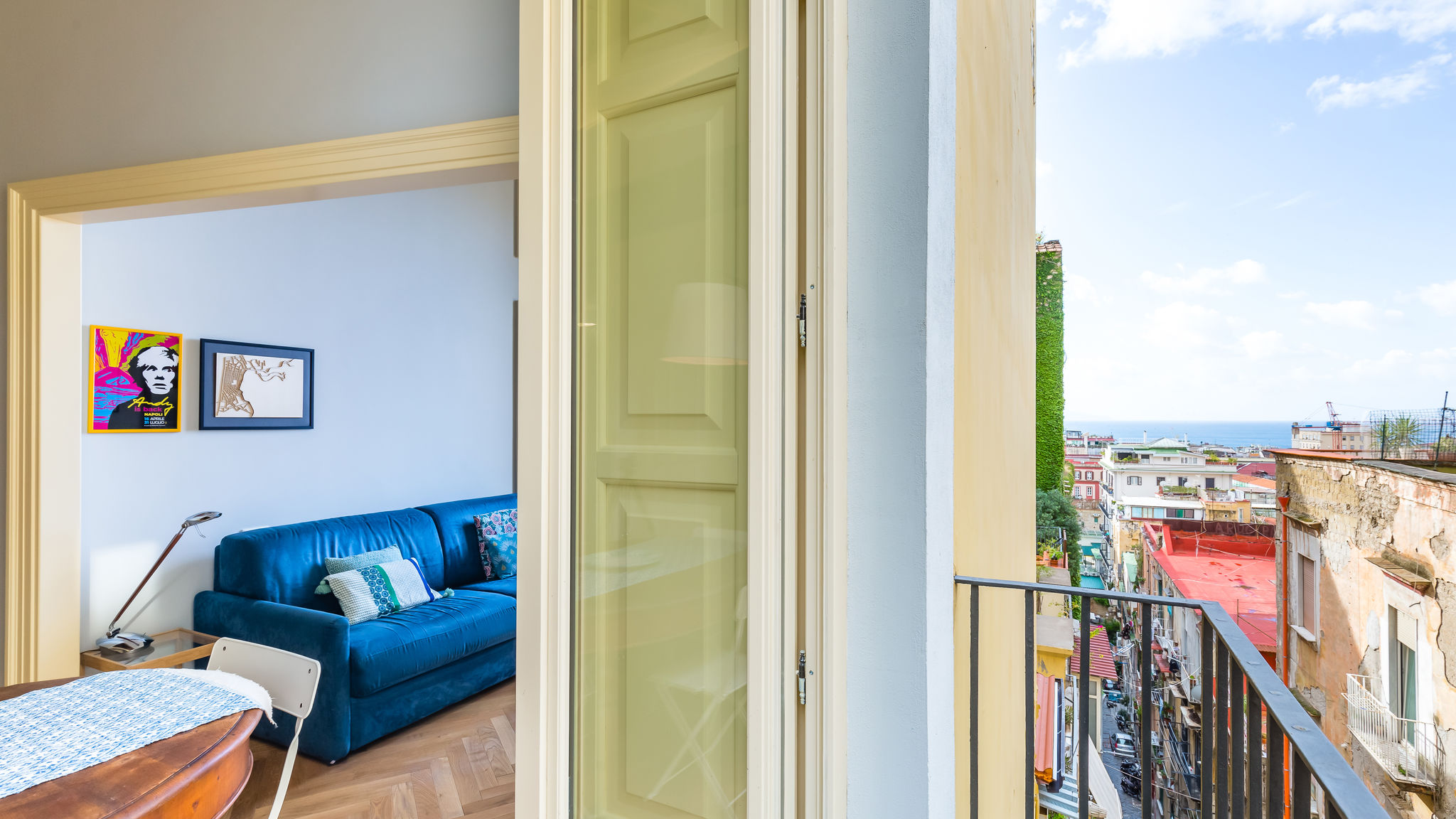
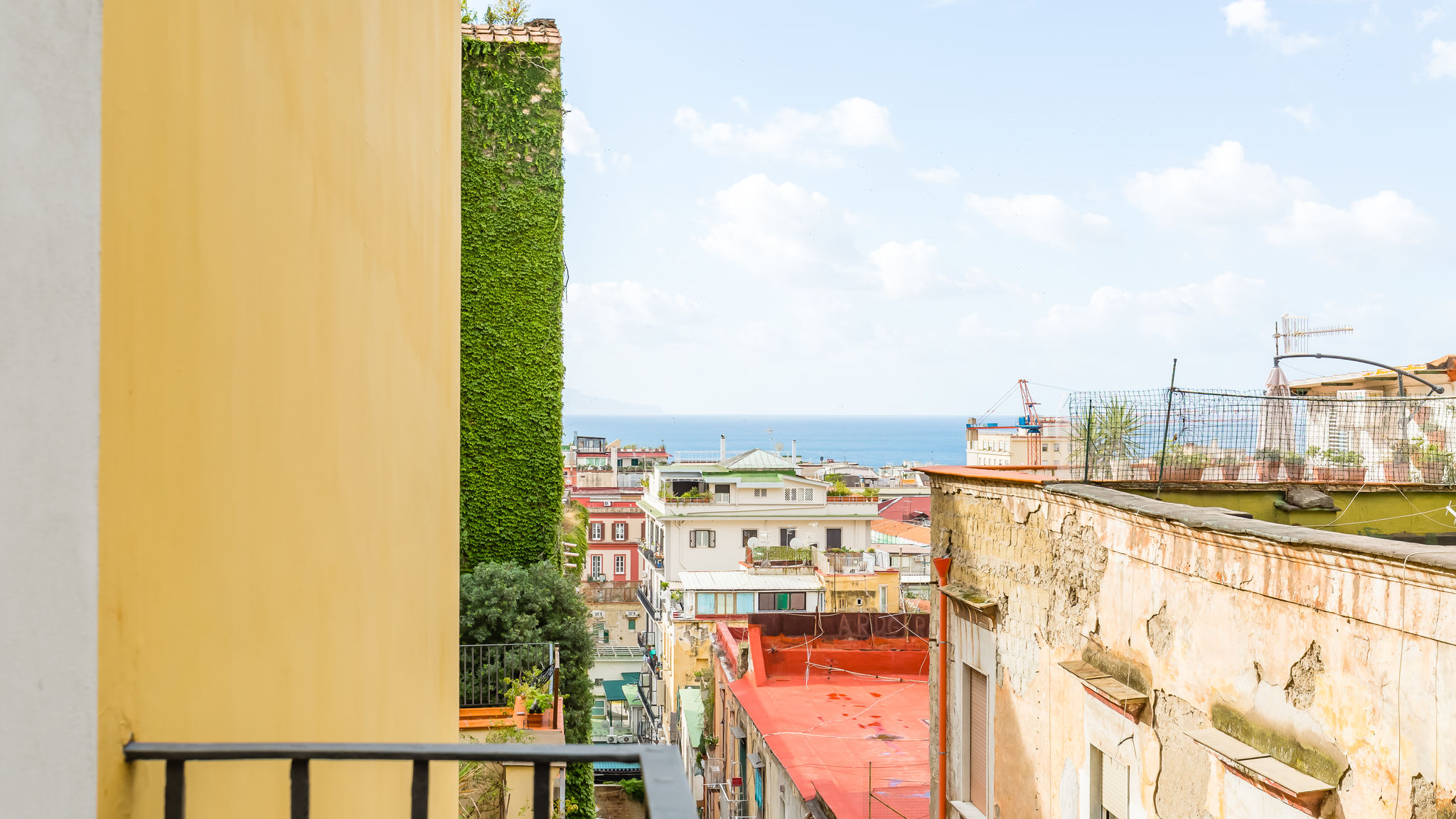
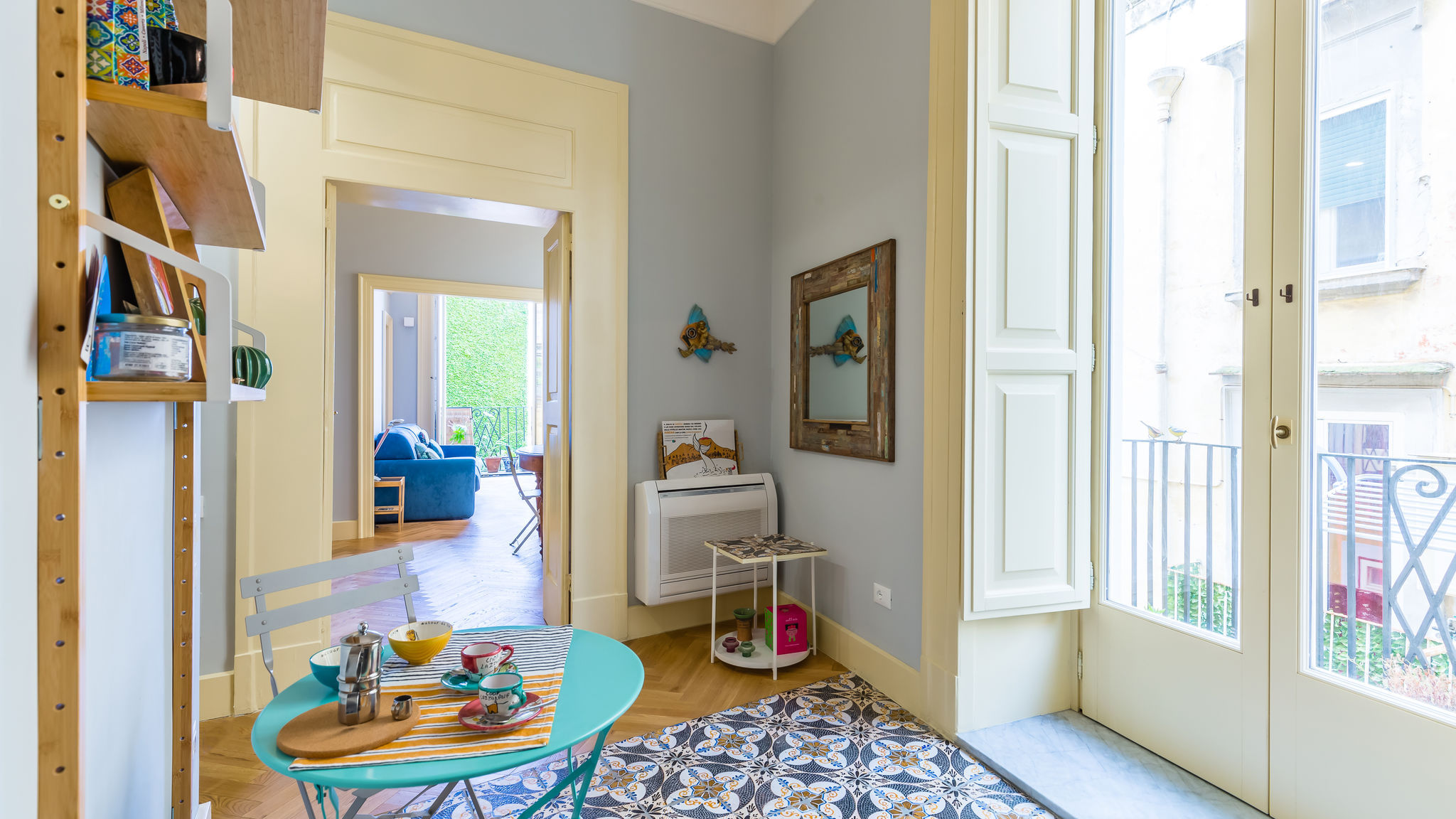
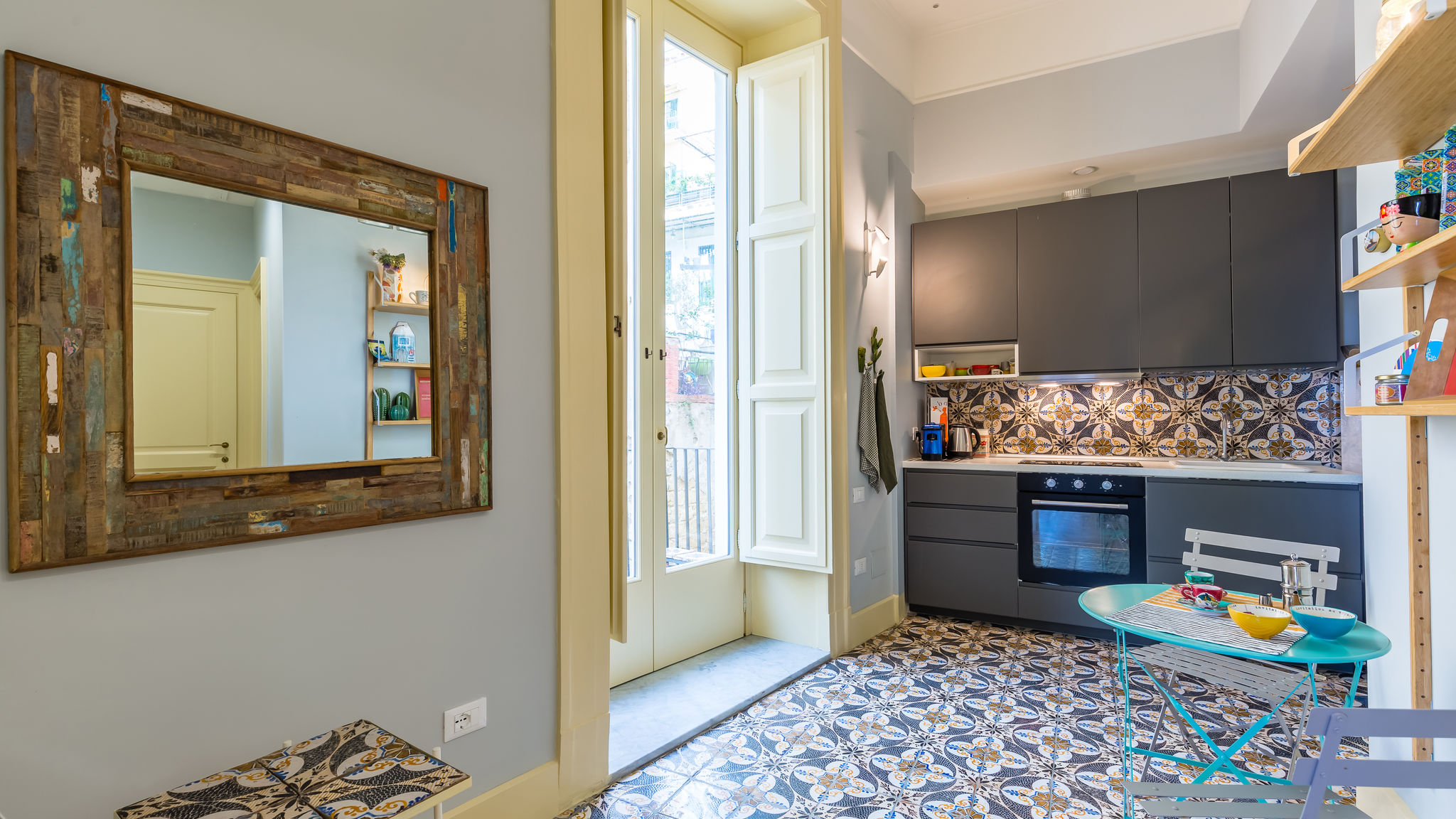
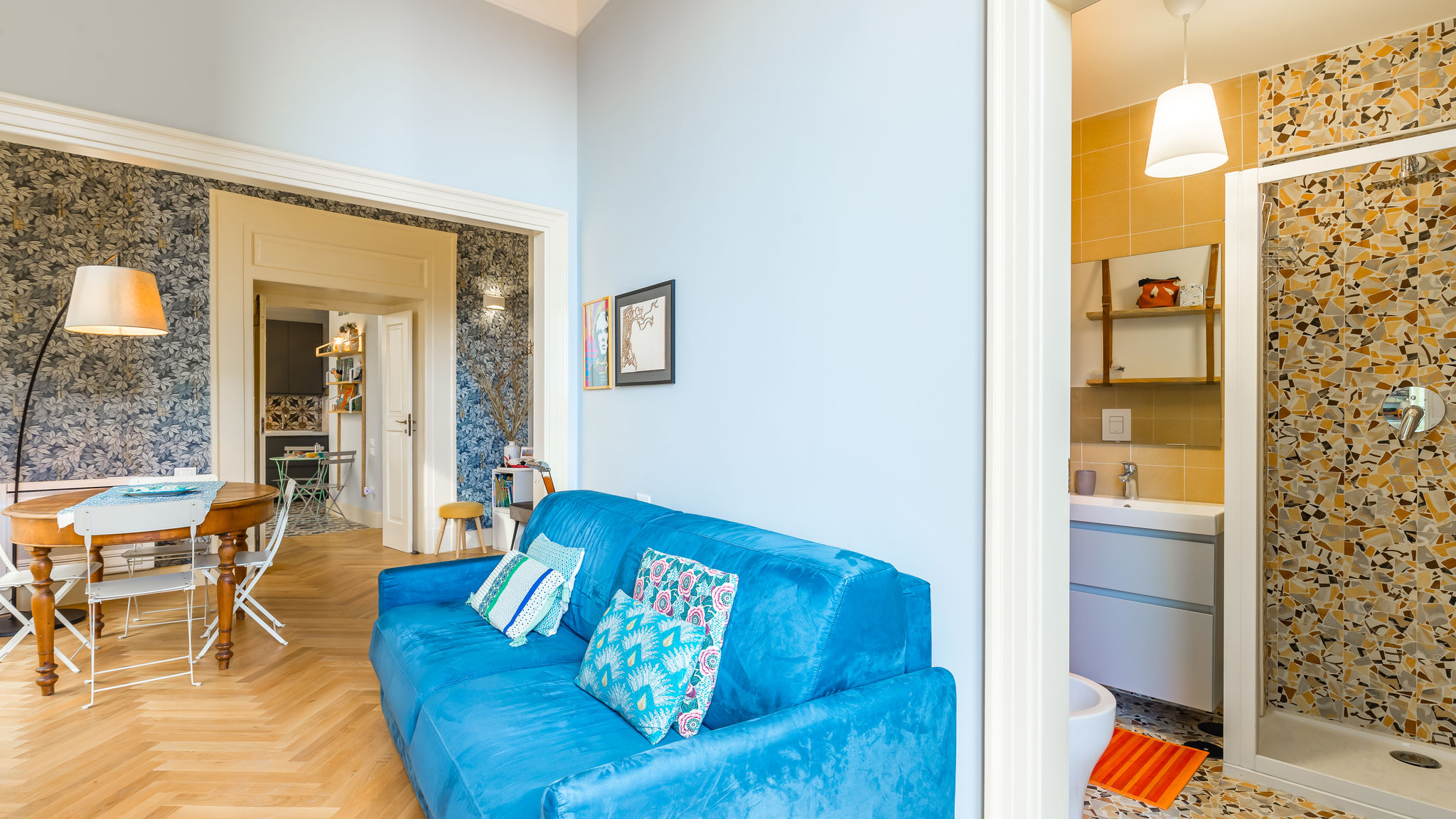
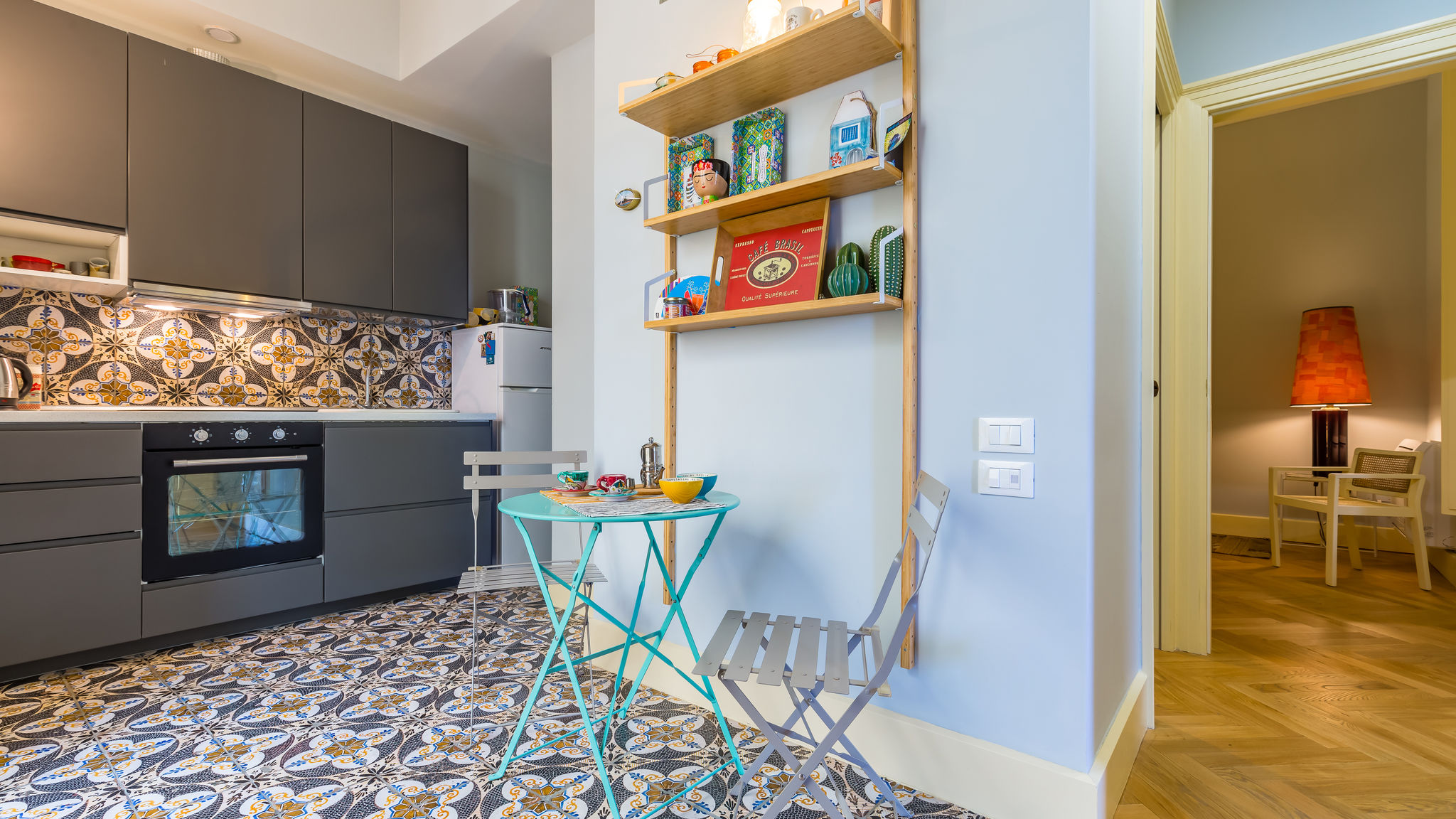
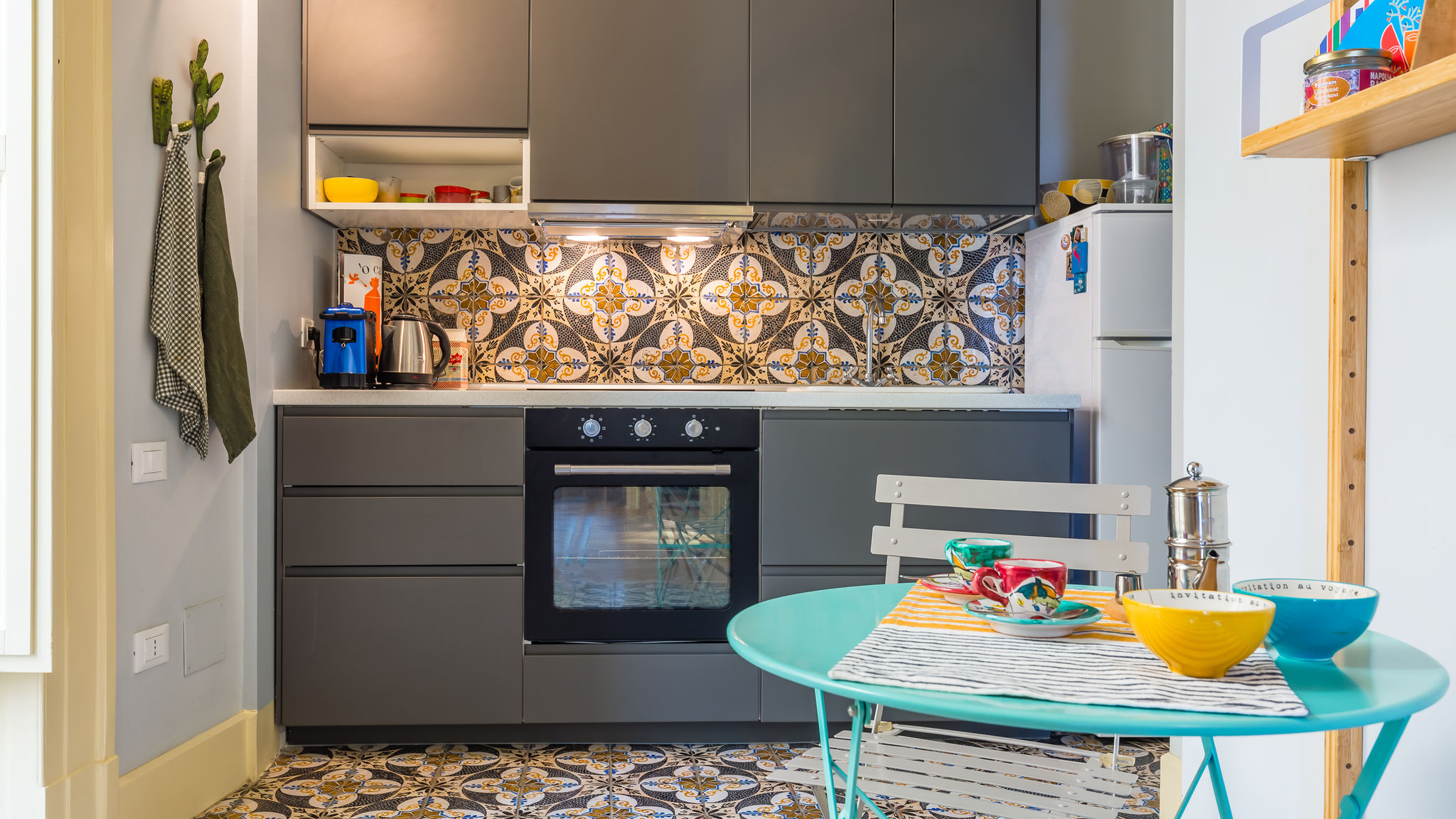
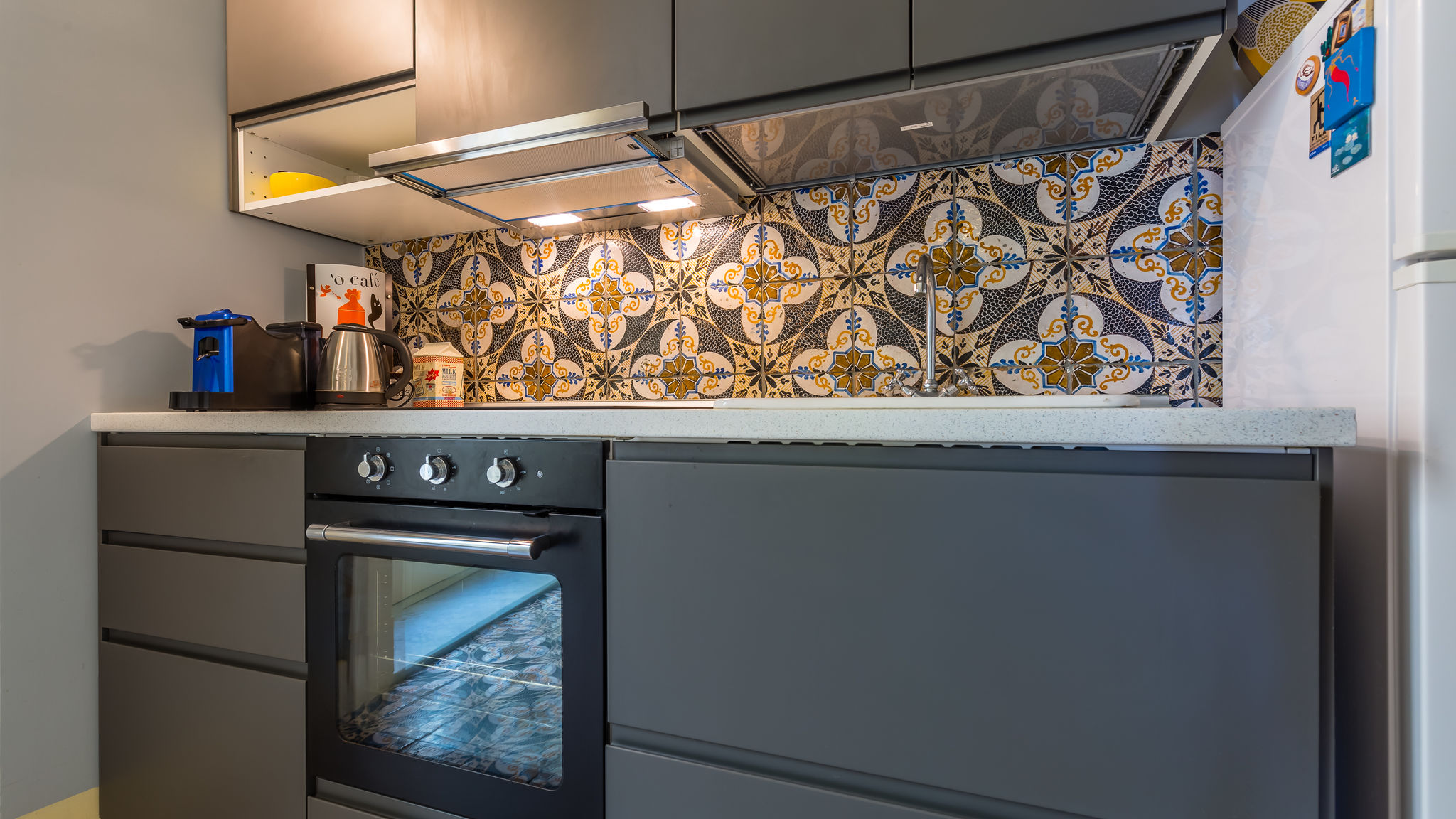
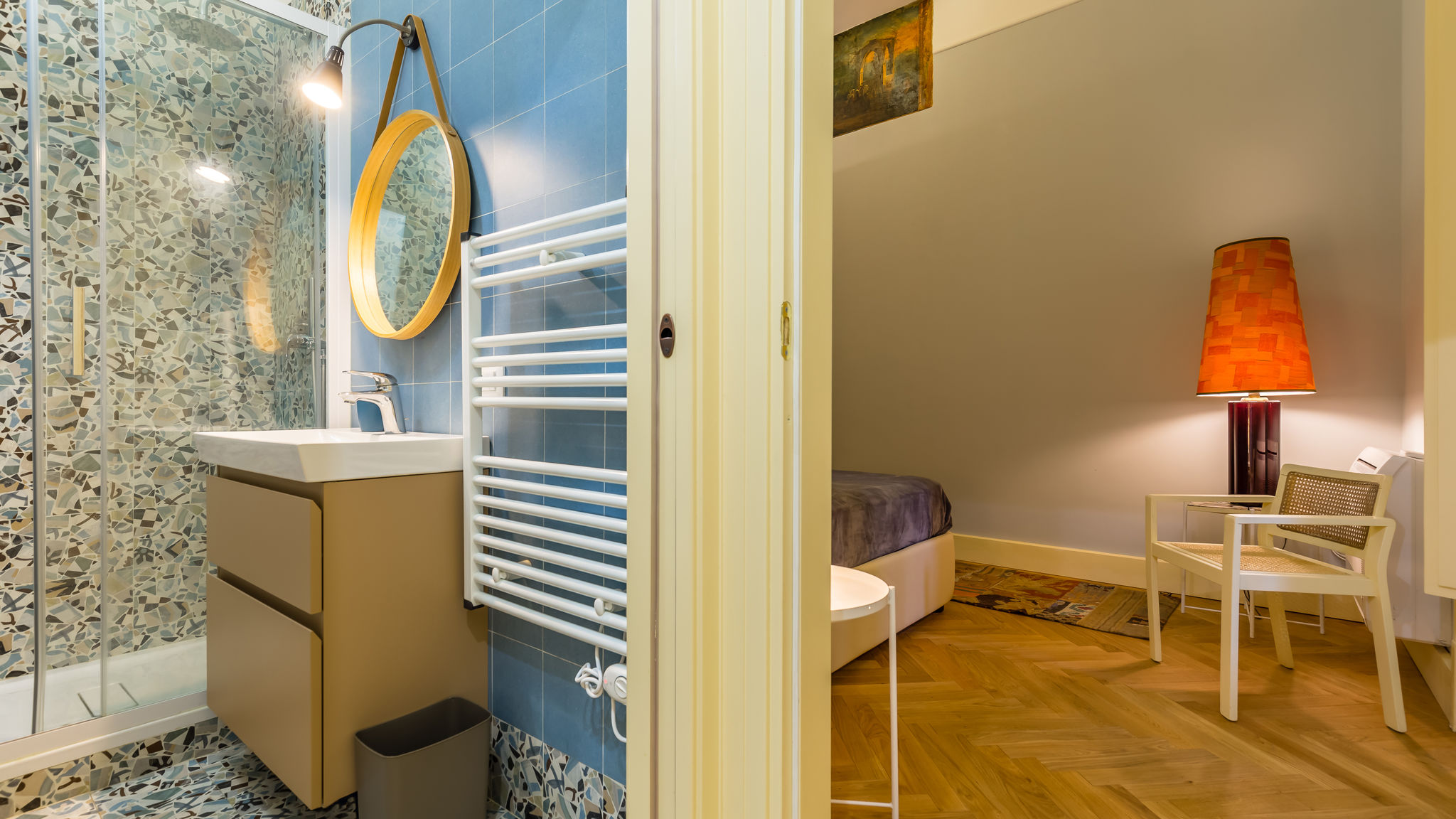
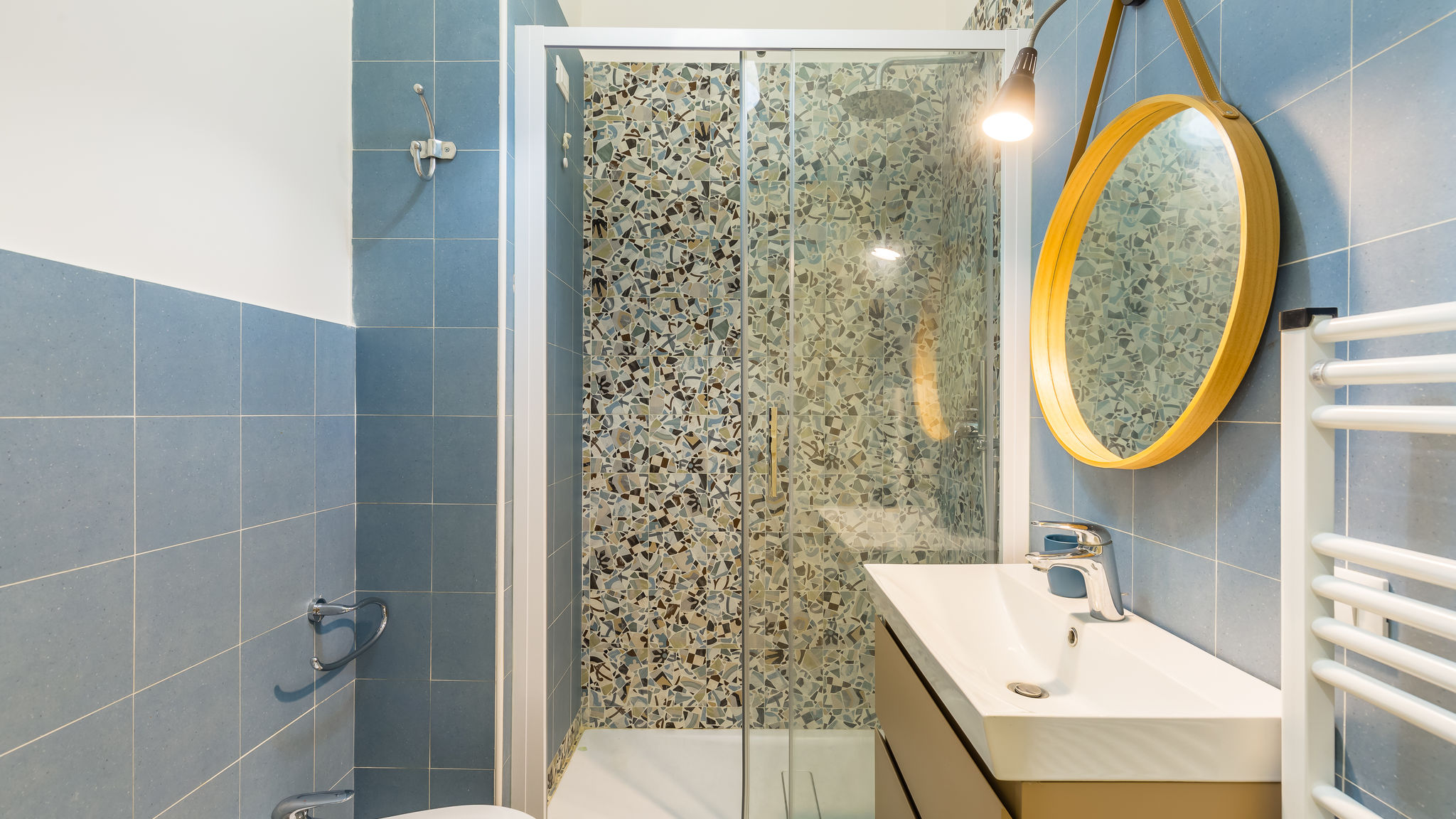
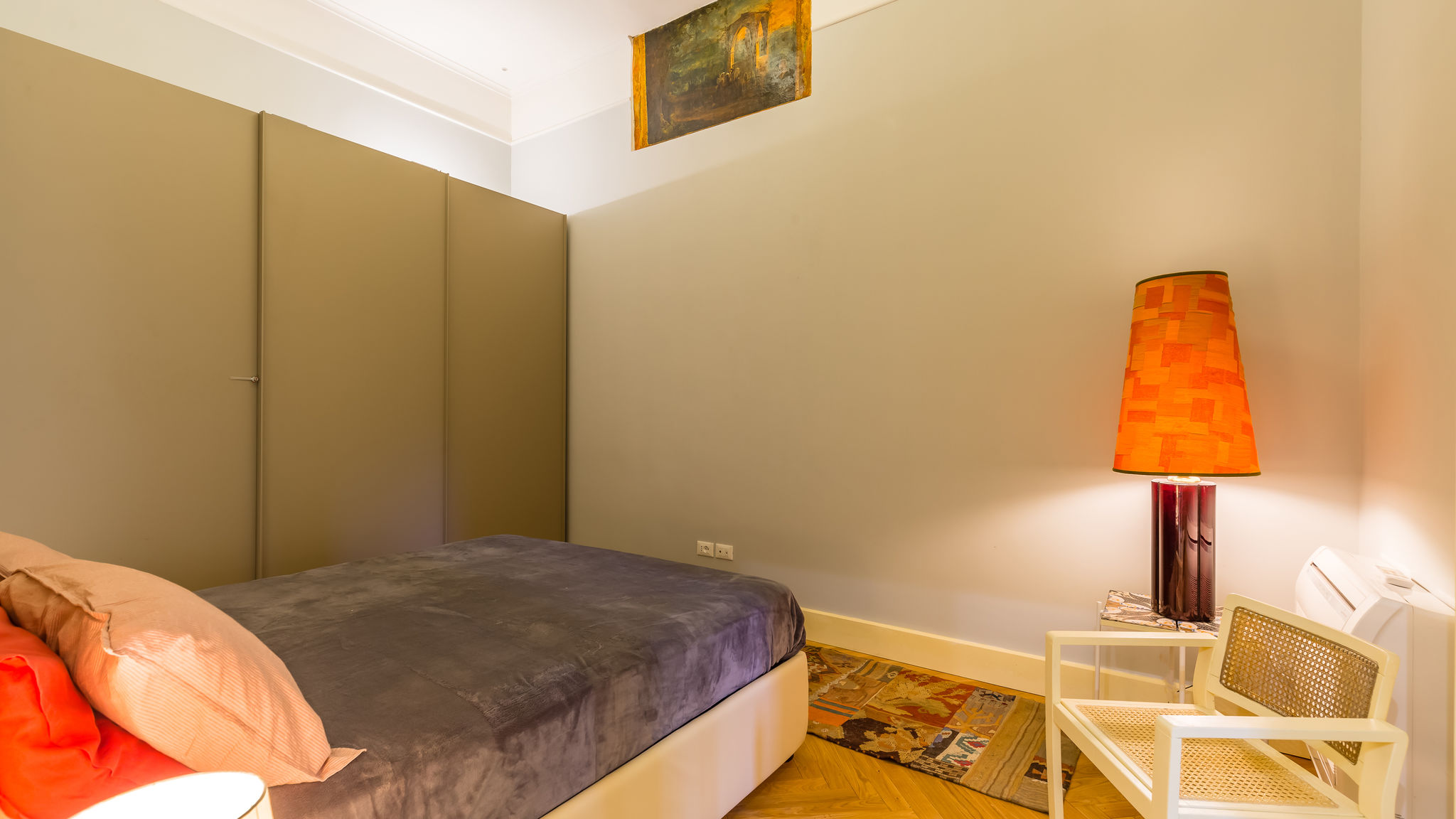
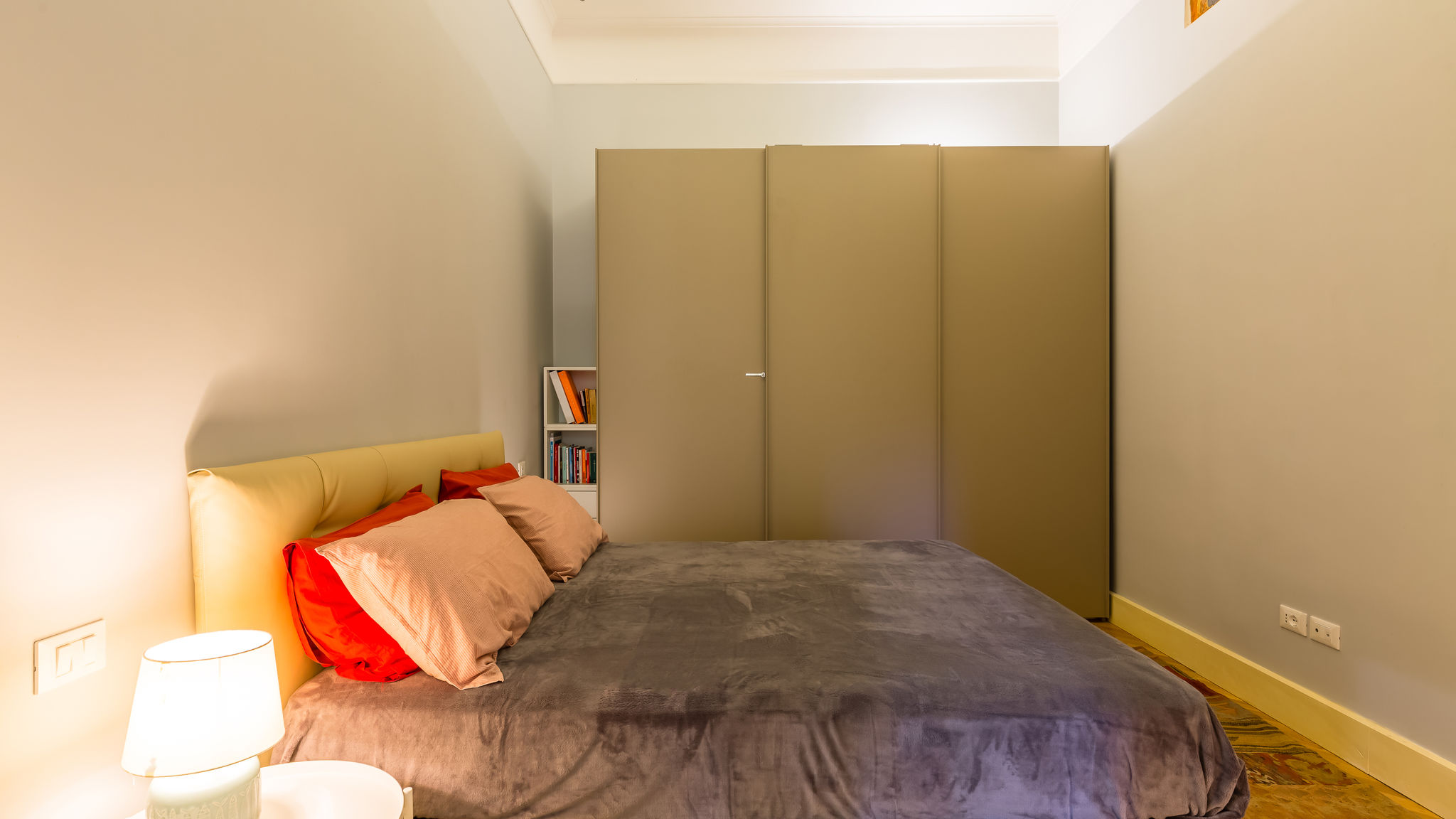
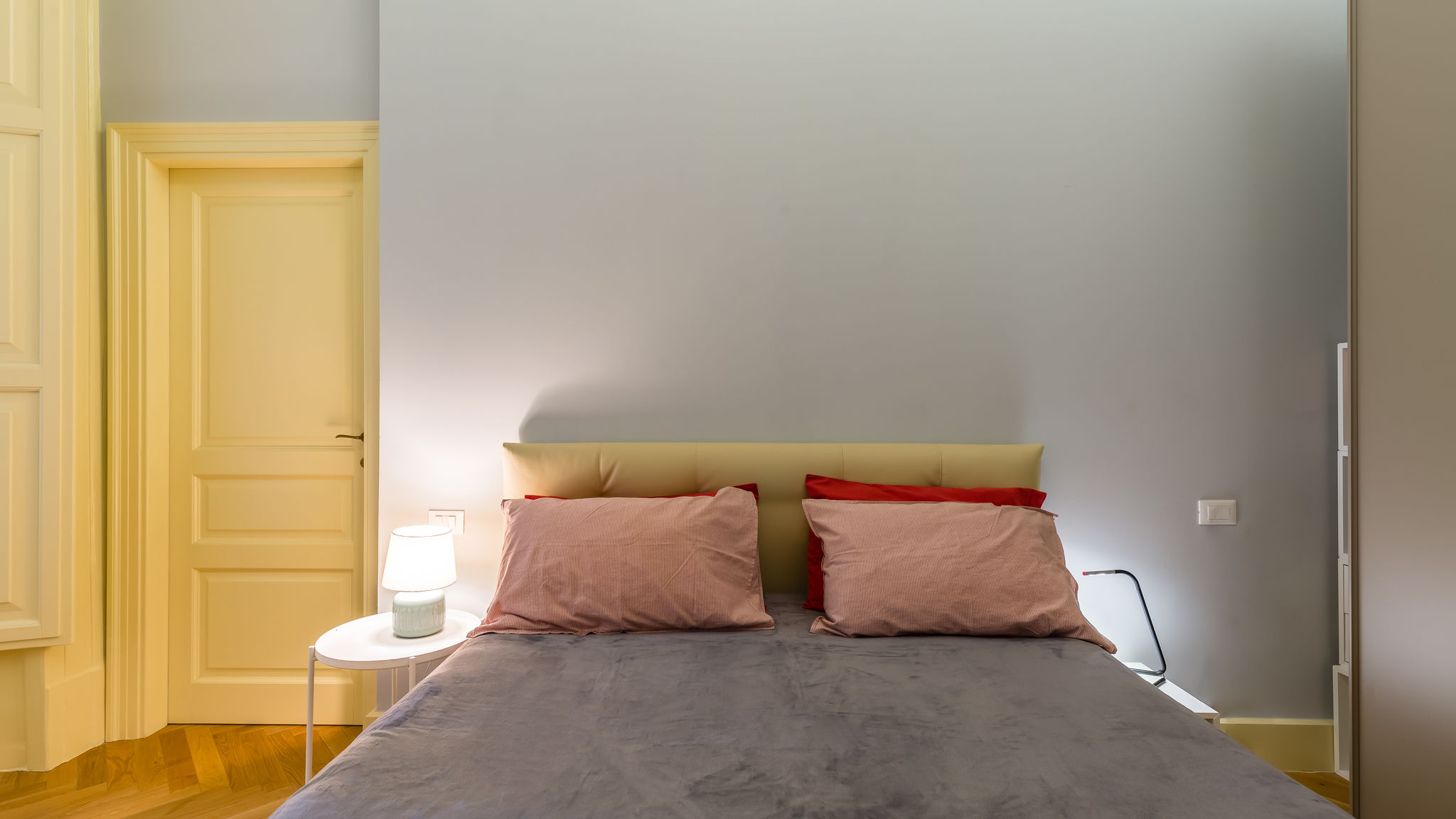
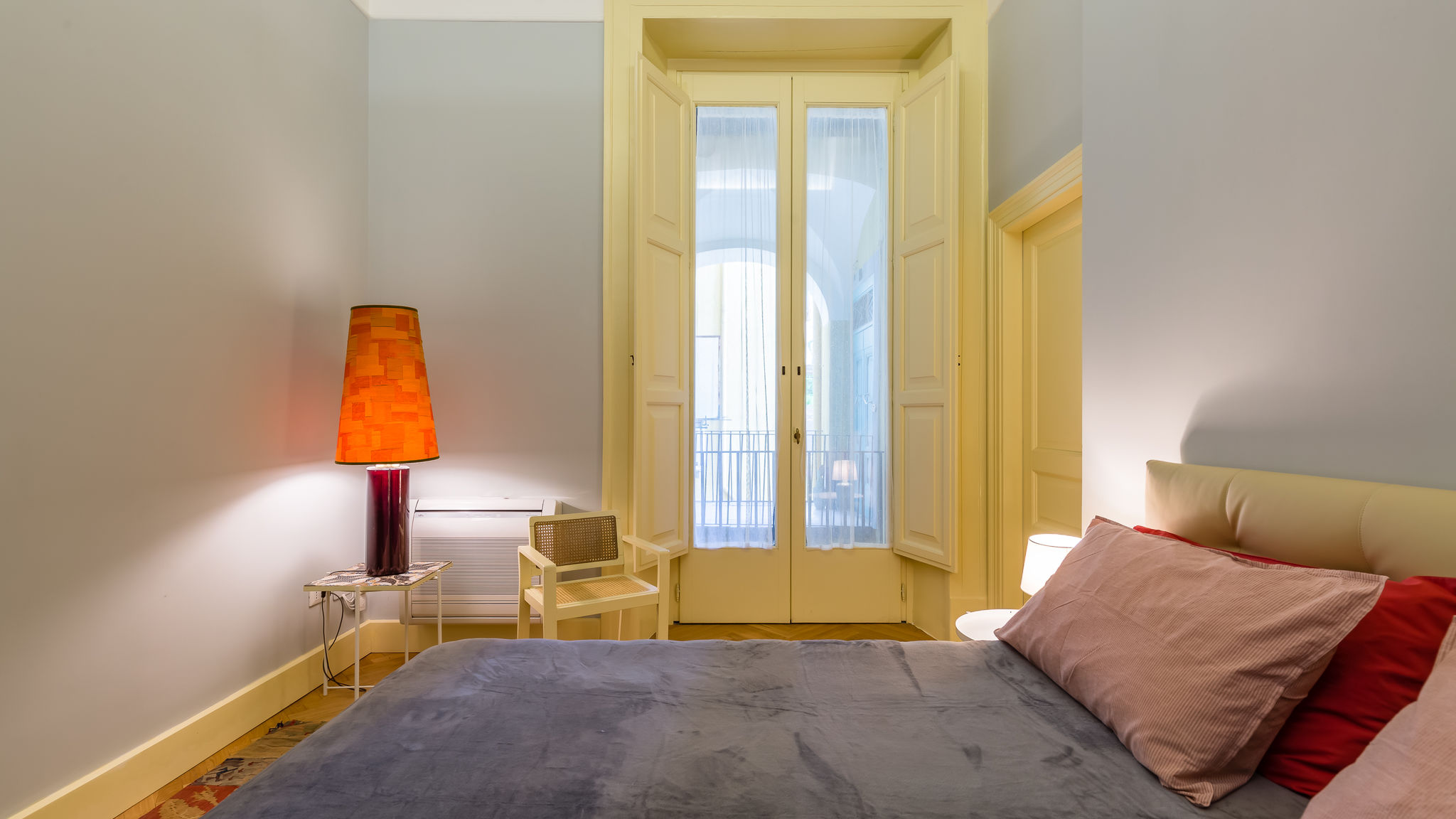
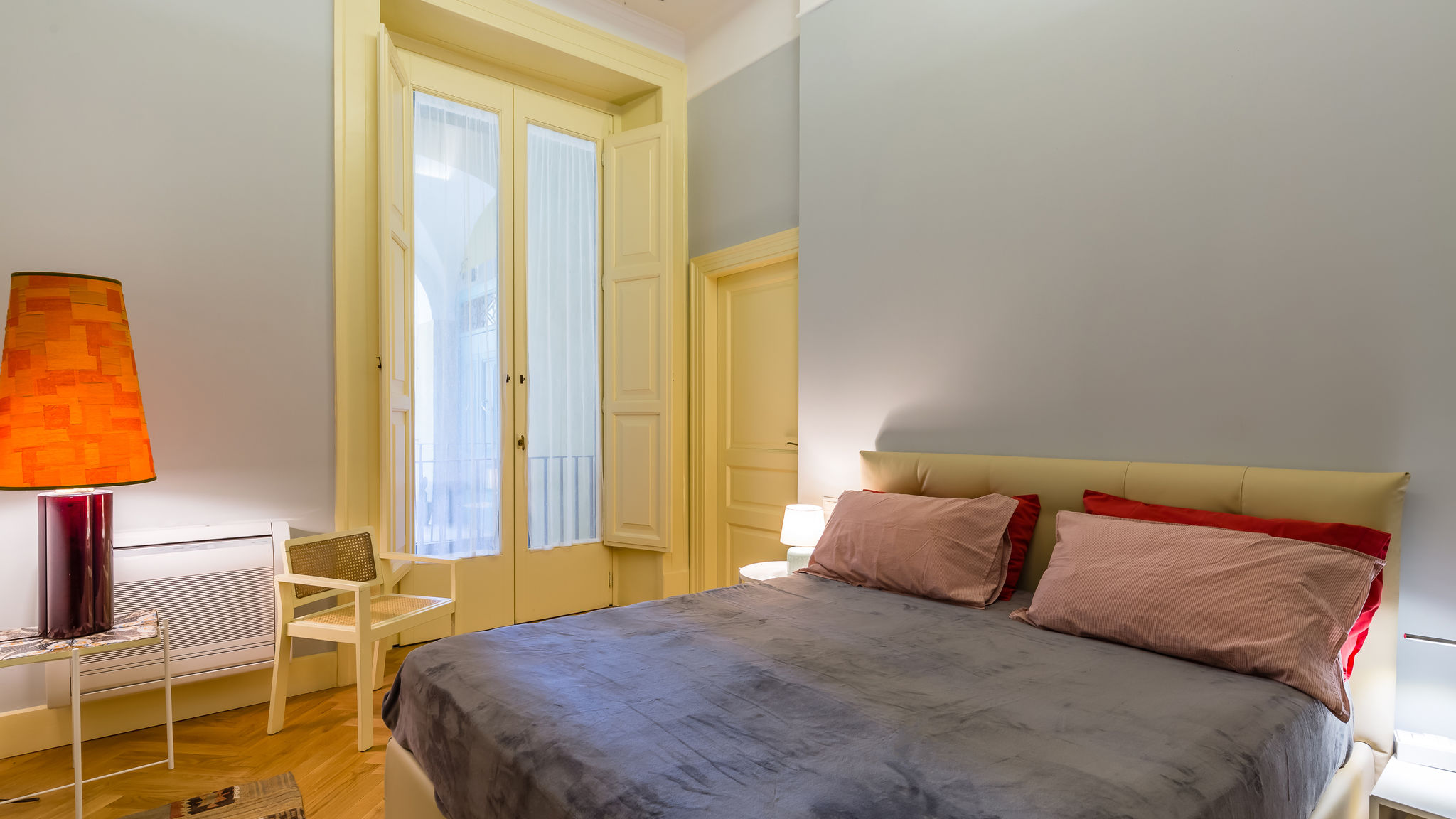
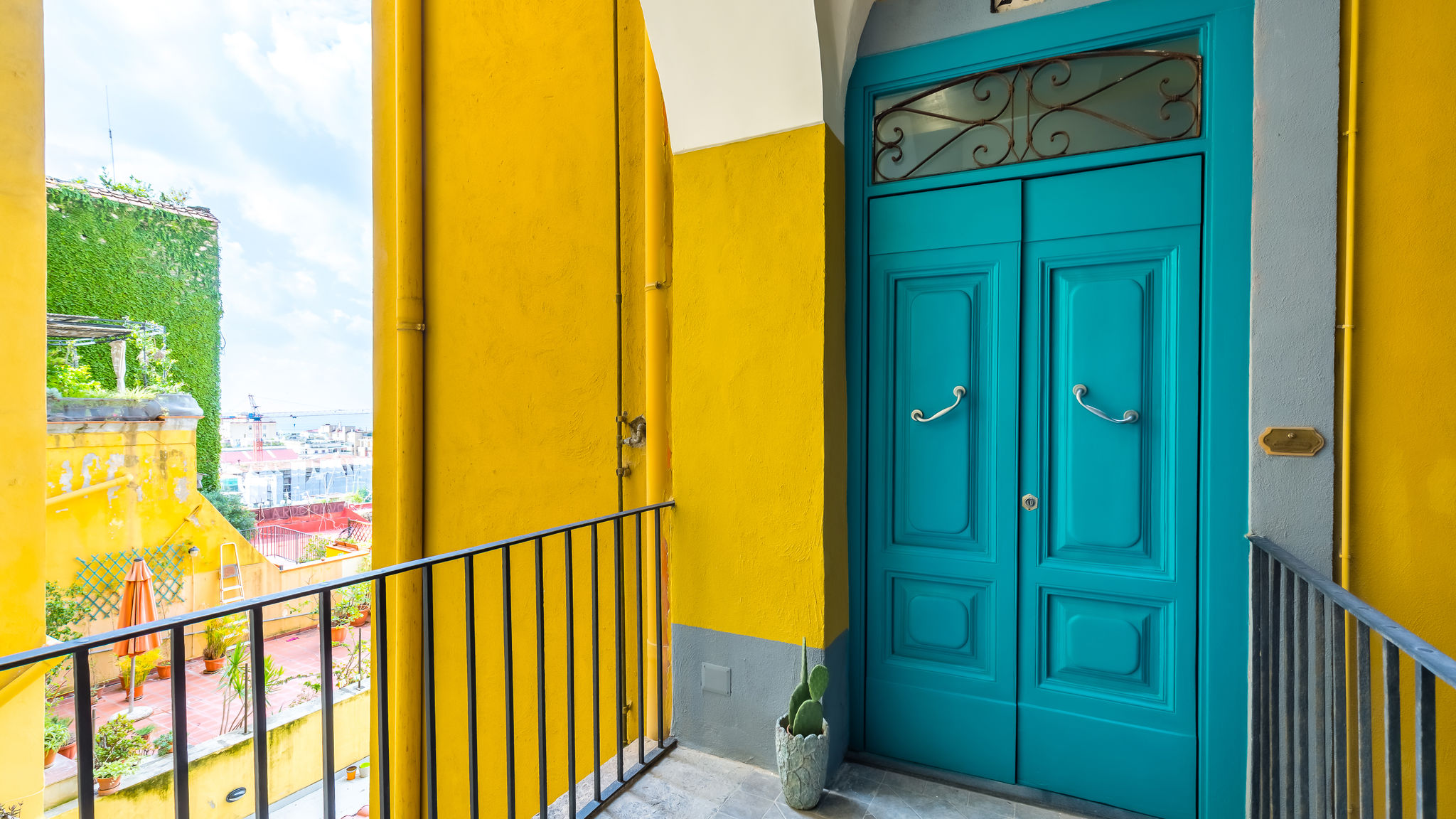
Apartment "Donna Costanza da Pietrasalata"The building overlooks the stairs of Via Rega, on the corner with the staircase of Santa Maria Apparente.It was built in the seventeenth century and until the early twentieth century, it held the role of ecclesiastical residence. In the Spanish period, the city walls were extended to incorporate the fort on Monte Sant'Almo, thus enclosing the Poggio delle Mortelle. This, at the time, was a wooded area between Pizzofalcone and the Vomero hill, overlooking the suburban Riviera di Chiaja below, and housed only a few small hermitages outside the city. The new condition quickly transformed it into a monastic citadel sheltered by the Walls. Along the rocky edge the convents of Santa Maria "a Parete" (today, "Apparente"), of Santa Maria di Betlemme, of Suor Orsola Benincasa, San Nicola da Tolentino, San Francesco.The building in which the apartment is located was never a convent, but the residence of nuns dedicated to charitable activities; among other things, they managed until the first post-war period the Institute for the "blind people" of the Rodinò Foundation, which was built in the mid-nineteenth century thanks to a loan from Lady Strachan Marchesa di Salsa, and occupied the entire building of the ancient Opificio delle Pietre Dure of Charles III of Bourbon, now abandoned, which still shows at number 17 in via Rega its majestic portal in superbly worked piperno, with two ashlar pilasters supporting a round arch and Doric capitals. From the first seventeenth-century construction, the building underwent (as often in ecclesiastical properties) numerous renovations and additions to meet the changing needs, which made it divided into courtyards, balconies, and terraces. At the time there was also a connection with the Palazzo Rodinò through a series of closed volumes and hanging gardens, which are still visible today.The apartment is distinguished by the larger size of the balcony (today, of the kitchen with original nineteenth-century majolica) that overlooks the ramps of Santa Maria Apparente and rests on pilasters and volutes. It was the home of the Mother Superior, with an independent entrance but connected to the rest of the residence through a door (now walled up), of which the upper door painted with an image of adoration of nuns and commoners to a Madonna remains visible in the master bedroom. crowned.
Speak with our team to check availability, pricing, and book your stay.
Login to Enquire →New here? Create an account
 Google
 Amazon